

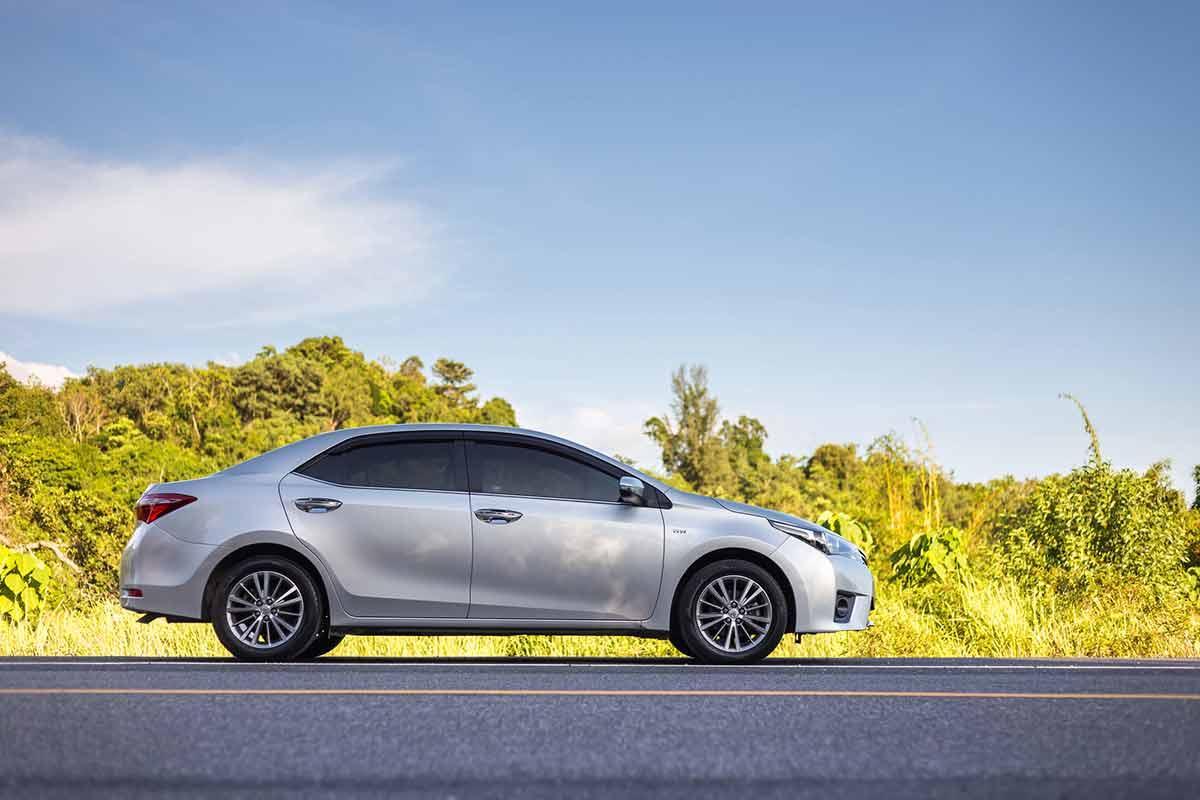
For a first car, the Toyota Corolla, Honda Civic, Mazda3, and Hyundai Elantra consistently come out ahead, with the Subaru Crosstrek and Hyundai Kona as the pick if you want a small crossover instead of a sedan. What they share matters more than any one of them individually: low insurance costs, cheap and predictable repairs, and forgiving handling that turns an inevitable first-year mistake into a minor scare instead of an expensive one.
Horsepower and styling matter a lot less here than a handful of practical factors. Good outward visibility makes low-speed mistakes, the kind almost every new driver makes, easier to avoid in the first place. Modern safety features like automatic emergency braking and forward collision warning, now standard on many compact models even a few years used, add a real backstop. Moderate power keeps the car easy to control rather than tempting a heavy foot. And because insurance for new drivers in Ontario is already expensive regardless of the car, choosing a model that insurers consider low-risk on its own merits helps keep that cost from stacking even higher.
The Toyota Corolla shows up on nearly every first-car recommendation list for a reason: it's inexpensive to insure, cheap to maintain, and reliable enough that a used one from the past several years is still a safe bet. The Honda Civic offers similar dependability with a bit more room and a strong resale value if you outgrow it later. The Mazda3 is a comparable option that tends to feel a little more refined to drive without sacrificing the reliability new drivers need. The Hyundai Elantra rounds out the compact sedan options with competitive pricing on the used market.
If a small crossover fits your needs better than a sedan, the Subaru Crosstrek and Hyundai Kona are worth a look, both offer manageable size, solid safety ratings, and available all-wheel drive for Ontario winters without becoming difficult to handle as a first vehicle.
New and young drivers pay some of the highest insurance premiums in Ontario, and no car choice eliminates that entirely. What you can control is avoiding the models that make it worse: high-performance trims, larger SUVs, and vehicles with expensive parts or high theft rates all push premiums up further. Sticking to a widely available, moderately powered compact with strong safety ratings, like the models above, keeps your quote as reasonable as it can be while you're still building a driving record. It's worth getting quotes on two or three specific vehicles before you commit, since the difference between models can be significant even within the same body style.
Often, yes, but not in the way most people assume. Having no credit history isn't the same as having bad credit. Canadian credit bureaus build your file based on borrowing activity over time, so if you've never had a credit card, loan, or other credit product, there's simply nothing there yet, not a negative mark, just an empty or "thin" file. Lenders read that differently than they read a history of missed payments, but it still means they can't rely on a score the way they would for someone with an established history.
That's where a lot of first-time drivers get stuck, not because anything went wrong, but because there's no track record for a lender to evaluate. In those cases, lenders typically look at other things instead: steady income, how long you've been employed, and whether you can put down a reasonable down payment. A co-signer with an established credit history can also strengthen an application significantly if one is available to you.
The upshot is that a thin credit file is a solvable starting point, not a dead end. A first loan, financed and paid on time, is often what builds the credit history that makes the next one easier to get on better terms.
If you're a first-time driver without an established credit history, or your financial situation is more complicated than a simple thin file, that's exactly the kind of application we're set up to look at properly. We focus on what your situation looks like now, not just what a credit score says on paper. You can see if you qualify in a few minutes without it affecting your credit.
Is a used car a better choice than a new one for a first-time driver?
For most first-time drivers, yes. A used compact model costs less upfront, typically costs less to insure than an equivalent new vehicle, and reduces the financial impact of the inevitable first-car scrapes and mistakes.
Do I need all-wheel drive for my first car in Ontario?
Not necessarily. A front-wheel-drive compact with a proper set of winter tires handles most Ontario winter conditions well. AWD helps more in areas with heavier, less-plowed snow than it does for typical city and highway driving.
Will having no credit history hurt my car loan application?
It changes how a lender evaluates you, but it isn't the same as bad credit. Lenders can look at income, employment stability, and a down payment instead of relying solely on a credit score.
Does the car I choose actually affect my insurance as a new driver?
Yes. While new and young drivers pay more across the board, choosing a model insurers consider lower-risk, generally a moderately powered, widely available compact with strong safety ratings, keeps your premium from climbing even higher.
Insurance costs vary by driver, location, and the specific vehicle and trim. Get quotes on the exact models you're considering before making a final decision.





.png&w=64&q=75)

.png&w=64&q=75)


Sep 09, 2026
How to Pay Less Tax When Buying a Used Car in Ontario

Aug 10, 2026
How Co-Signing Works for Ontario Car Loans

Aug 02, 2026


.png&w=48&q=75)
.png&w=48&q=75)
.png&w=48&q=75)