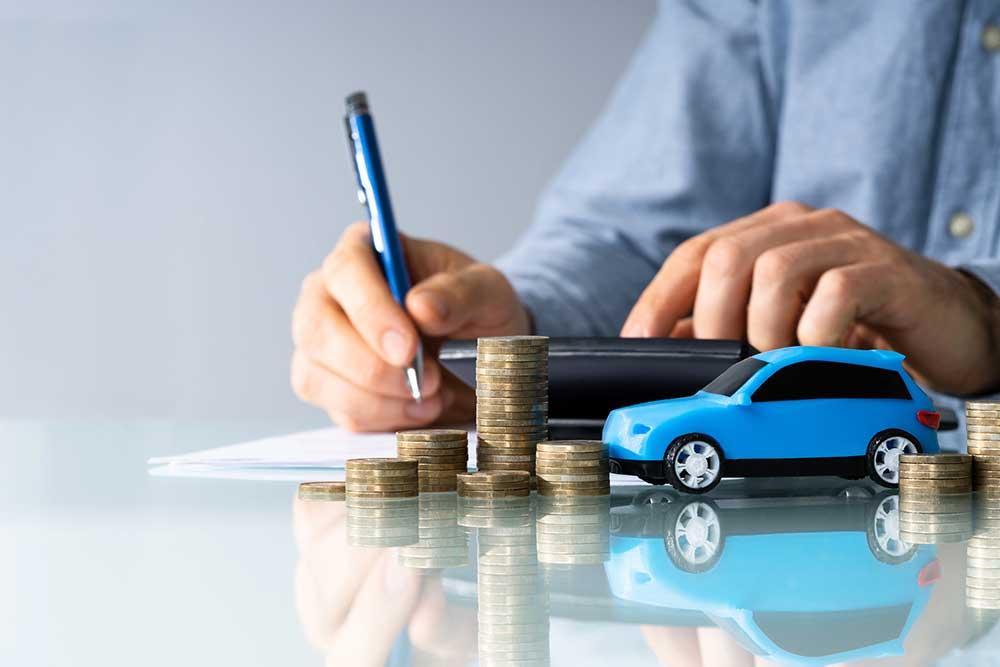
You don't always need a down payment to finance a car in Ontario, and at Carhive it isn't a requirement for every application. That said, money down usually works in your favour. It lowers your payment and the interest you pay. If your credit is still being rebuilt, it can also give a lender the extra confidence to approve you. How much makes sense depends on your budget and goals, so it helps to start with what a down payment actually changes.
Your payment and interest both drop. Everything a down payment does comes back to one thing: you borrow less. You're financing a smaller amount, so each monthly payment shrinks. Interest is charged on what you borrow, so the total interest falls too, and the higher your rate, the more that matters.
Your application gets stronger. Borrowing less also changes how a lender sees you. When you've put your own money into the car, the lender takes on less risk. That's why a down payment is one of the few things you can change right away to strengthen an application built on thin or damaged credit.
You start with a buffer against negative equity. Cars lose value from the day you drive them away, so if you finance the full price, it doesn't take long to owe more than the car is worth. That gap becomes a real problem if you need to sell or the car is written off in an accident, and a down payment narrows it from the start.
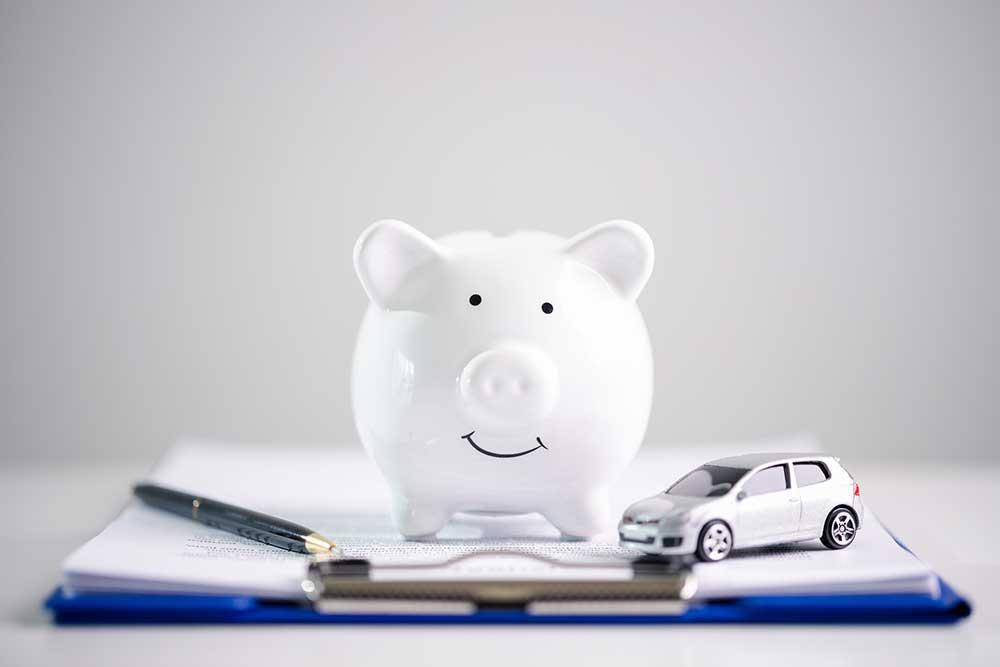
To see how much difference it makes, take a $20,000 loan over 60 months. The table below uses a 5% interest rate, the same rate the Financial Consumer Agency of Canada (FCAC) uses in its car loan examples. It's for comparison only, not a quote. Your actual rate depends on your credit and the lender.
| Down payment | Amount financed | Monthly payment | Total interest |
|---|---|---|---|
| $0 | $20,000 | $377 | $2,645 |
| $2,000 | $18,000 | $340 | $2,381 |
| $4,000 | $16,000 | $302 | $2,116 |
At 5% rate, putting $2,000 down saves about $265 in interest and trims roughly $38 off each payment. That may sound modest, but the savings grow with your rate, because every dollar you don't borrow avoids more interest. Buyers rebuilding their credit generally pay higher rates, so for them a down payment goes further.
At lower rates, the bigger benefits are a more manageable monthly budget and a stronger application, not the interest saved.
Not necessarily. Carhive works with buyers in many credit situations, and a down payment isn't always required. It does carry more weight when your credit is weaker, though. It shows the lender you're sharing the risk, and on a borderline application that can make the difference.
If you don't have savings to put down, choosing a less expensive car gets you much of the same benefit. A smaller loan gives the lender less to take on and gives you a payment that's easier to keep up with. For more on what lenders look at, see How to Get Approved for a Car Loan With Bad Credit.

Financing the full price isn't automatically a mistake. $0 down can be a reasonable choice if three things hold: you need a car for work now, the payment fits comfortably in your budget, and you plan to keep the car long enough for the balance to fall below its value.
The risk comes when $0 down is paired with a long loan term. A longer term lowers your payment, but it also slows how quickly you build equity and raises your total cost. FCAC's example makes the point: the same $25,000 car financed at 5% costs $26,974 over 36 months and $29,681 over 84. Start with nothing down on a long term, and you'll spend more of the loan owing more than the car is worth.
If you're replacing a car you already own, your trade-in is often the easiest place to start, since its value can go toward your next vehicle. Our trade-in estimator gives you a number before you shop. First, check whether you still owe more on your current car than it's worth. If you do, read Understanding Negative Equity as It Relates to Your Vehicle, because rolling an old balance into a new loan raises what you owe instead of lowering it.
Without a trade-in, a few months of saving can still make a difference. Even a modest amount reduces your loan and shows a lender you can manage money. If neither option works on your timeline, remember that a lower vehicle price has the same effect as a down payment. Either way, you borrow less.
The price on the windshield isn't the full amount. In Ontario, buying from a dealer means paying 13% HST on top of the vehicle price, and there may be licensing and other fees. Whatever you don't cover upfront is added to what you finance. When you compare offers, FCAC recommends looking at the total amount financed and the total cost, not just the monthly payment.
Once you have a rough figure in mind, our auto loan estimator lets you enter your monthly payment, down payment and credit range to see vehicles that fit. If you're still not sure whether you'll need money down at all, applying is the quickest way to find out.






Oct 08, 2026
Dealership Financing vs. Bank Loans: Which Is Better in Ontario?
Sep 09, 2026
How to Pay Less Tax When Buying a Used Car in Ontario
Sep 09, 2026